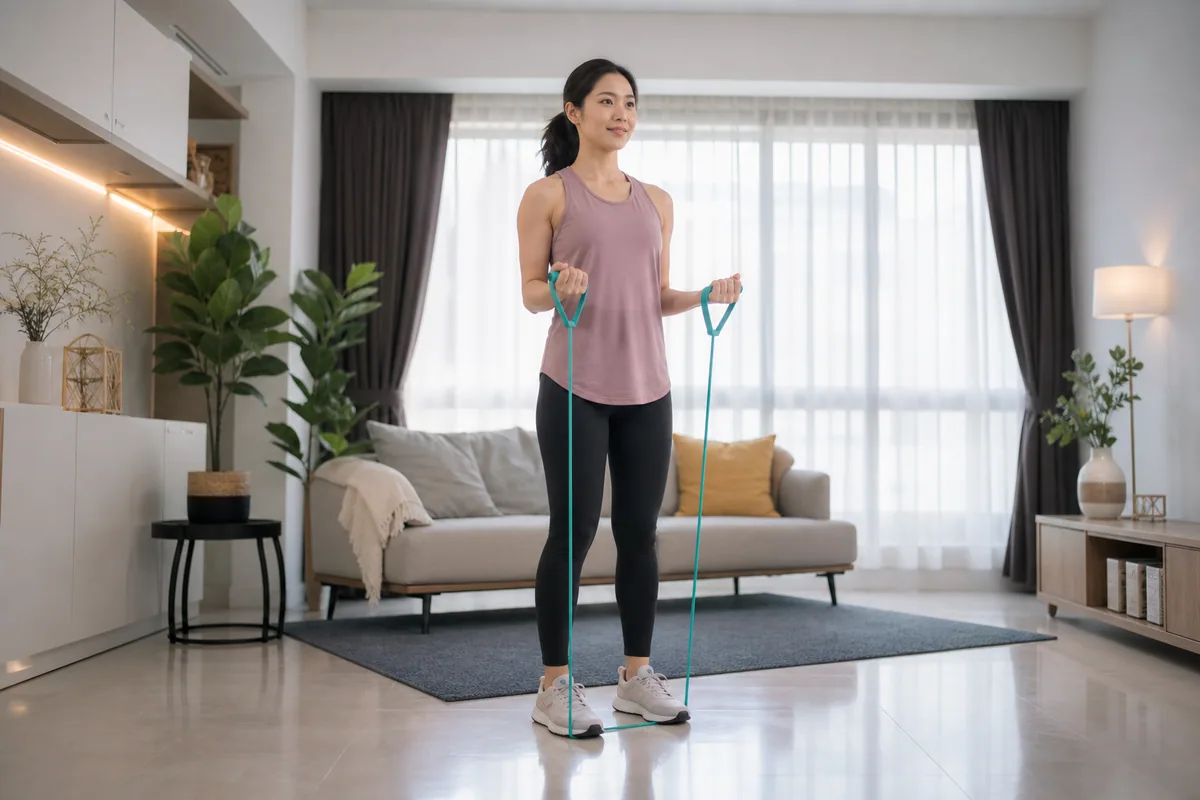
Exercise is not only about losing weight. For women with PCOS, it is one of the strongest ways to help the body use insulin better, ease stress, and steady your mood. What matters is not the “best” type of exercise, but the kind you can repeat week after week without feeling punished. Consistency beats intensity. This page is the main hub for exercise and lifestyle, and each section links you to a more detailed guide.
Why exercise matters specifically for PCOS
To understand why exercise works so well, we need to look at the root of the problem. Many (but not all) women with PCOS have insulin resistance, a state where the muscles and liver respond poorly to insulin, so the pancreas is forced to release more of it. This high insulin can push the ovaries to make more androgens (“male” hormones such as testosterone), which in turn contribute to acne, excess hair, and irregular periods. This is where exercise comes in, because active muscle can take glucose out of the blood without needing much insulin, so every session is like opening an extra door for blood sugar to enter your cells.
Regular exercise over time can also raise SHBG (sex hormone binding globulin), the protein that binds excess testosterone in the blood so it becomes less active. When body weight and visceral (internal) fat fall, insulin resistance usually improves and SHBG rises, two changes that help ease androgen symptoms. This is why the 2023 international PCOS guideline and Malaysian Ministry of Health resources place physical activity as part of first-line care for all women with PCOS, regardless of weight. These habits support menstrual function and fertility, and over the long term they lower the higher risk of type 2 diabetes and heart disease seen in women with PCOS.
Resistance training first, cardio second
Many women with PCOS start with hours of cardio because they want quick weight loss, then feel exhausted and stop. Resistance training, such as weightlifting, bodyweight exercises (squats, wall push-ups), or resistance bands, builds muscle that helps the body absorb blood sugar more efficiently. This is relevant because many women with PCOS have insulin resistance. Moderate cardio is good for the heart and mood, so a combination of both is ideal. For a fuller comparison, read cardio versus resistance training for PCOS, and if you are new to weights, the weightlifting for PCOS guide explains how to start safely.
What does the evidence say? No single type of exercise is an outright winner for everyone. Studies show that both resistance training and aerobic exercise (cardio) can lower testosterone and improve insulin markers in women with PCOS, with moderate-strength evidence. Resistance training is often under-prioritised by women with PCOS, yet it is the most effective for building muscle and can be done even when the knees or joints are not comfortable for running. That is why we put it first, not because cardio is useless. The most mature approach is to combine the two, namely resistance for building muscle and insulin sensitivity, and cardio for heart health, stamina, and mood.
How much exercise to aim for
The 2023 international guideline suggests the following targets as a general guide, not a punishment. To maintain health, adults should aim for at least 150 to 300 minutes of moderate-intensity activity per week, or 75 to 150 minutes of vigorous-intensity activity, plus muscle-strengthening activity on two non-consecutive days. If your goals include modest weight loss, the target can rise to at least 250 minutes of moderate-intensity activity per week, again plus strength training twice a week. For adolescents with PCOS the target is higher, namely at least 60 minutes a day of moderate-to-vigorous activity, with muscle- and bone-strengthening activities three times a week.
These numbers look like a lot, but they are weekly totals, not a single sitting. You can break them into blocks of 20 to 30 minutes. If you are just starting, do not jump straight to the full target; begin with what you can manage, for example three 20-minute sessions a week, then add gradually. Any movement is still better than none, and these targets should be a direction, not a reason to give up in the first week.
An example starter routine for one week
If you like a concrete example, here is a simple frame for beginners that you can adjust. On Monday, Wednesday, and Friday do a short resistance session of 20 to 30 minutes, for example squats, lunges, wall push-ups, and pulling exercises with a resistance band, two to three sets each. On Tuesday and Thursday do moderate cardio for 20 to 40 minutes, such as brisk walking, cycling, or swimming. Make Saturday a relaxed active day, for example a walk with family or gardening, and rest fully on Sunday. This frame gives you a mix of resistance and cardio within the weekly target range, but you are free to swap days around your work and family schedule. What matters is consistency over several weeks, not perfection in one single week.
In the first and second week, focus on building the habit and good technique, not heavy loads or high speed. Once the movements feel comfortable, only then add weight, repetitions, or distance gradually. This slow approach lowers the risk of injury and the burnout that makes many people quit by the third week.
Start small and realistic
You do not need an expensive gym membership. Walking around your housing area, taking the stairs at the office, or simple home workouts with a video are enough to start. A daily step target can be an easy starting point to track on your phone. See the walking 10,000 steps a day for PCOS guide for how to build up gradually without pressure. During Ramadan or busy spells, scale down to shorter sessions rather than stopping completely; a little that continues is better than a lot that grinds to a halt.
Beyond structured exercise, ordinary daily movement also matters. Activities like walking to the shop, housework, playing with children, or standing and moving every hour at the office are called non-exercise movement, and they contribute a great deal to daily energy expenditure and blood-sugar control. For women who sit long hours at a desk, getting up every 30 to 60 minutes for a short walk already helps. You do not need to wait for “official exercise time” to move.
Weight, fertility, and realistic expectations
In Malaysia, the two PCOS burdens felt most often are weight and fertility. You do not need to become thin to see results. Evidence shows that losing just 5 to 10 percent of body weight can already improve menstrual regularity, ovulation, insulin sensitivity, and mental health in many women with PCOS. For someone who weighs 80 kilograms, that means roughly 4 to 8 kilograms, a target that is far more realistic and sustainable than chasing a magazine “ideal” weight. Exercise supports this goal not only by burning calories, but by preserving muscle while you lose weight, so your metabolism does not fall too low.
For women trying to conceive, combining nutrition and exercise can meaningfully improve ovulation rates. However, it is important to know that exercise is not a guarantee of pregnancy, and if you have been trying for a while without success, an evaluation by an obstetrician-gynaecologist or a fertility specialist is still needed. Exercise is the foundation that supports other treatment, not a replacement for fertility care.
Sleep and stress matter just as much
Exercise alone is not enough if your sleep is in disarray. Poor sleep and prolonged stress can raise the hormone cortisol and disrupt blood sugar, two things that are already challenging for women with PCOS. Try to keep more consistent sleep times and cut down on screens before bed. The sleep and circadian rhythm in PCOS guide explains this link in more depth. Stress-relieving activities such as calm prayer, a leisurely walk, or slow breathing also help, and they are free.
How much sleep is needed? For most adults, aiming for 7 to 9 hours of quality sleep a night is a healthy range. Disrupted sleep even for a week can affect how the body controls blood sugar, so for women with PCOS, sleep is not a luxury but part of treatment. Another thing worth attention is sleep apnoea, where breathing repeatedly pauses during sleep. This is more common in women with PCOS, especially those who are overweight, and it can cause daytime sleepiness and worsen blood-sugar control. If your partner notices that you snore loudly or gasp during sleep, or you are always tired despite enough hours in bed, mention it to your doctor.
For stress, the evidence for mindfulness techniques such as breathing meditation is moderate but encouraging. Randomised trials show it can reduce stress, anxiety, depressive symptoms, and salivary cortisol levels in women with PCOS, while improving quality of life. This does not mean stress “causes” PCOS, but managing stress helps you stay consistent with healthy habits and eases the pressure cycle that worsens symptoms. Choose a method that suits you, whether calm prayer, walking in the park, journalling, or simply breathing slowly for a few minutes a day.
Make it a habit, not a punishment
Choose activities you genuinely enjoy, because those are the ones that last. There is no need to be “perfect” every day; plan 3 to 4 sessions a week and forgive yourself if you miss one. Cost should not be a barrier, as many options in Malaysia are free or cheap, from public fields to online workout videos.
A few practical ideas for the Malaysian context: use public parks and walking paths in residential areas in the morning or late afternoon when the weather is more comfortable; if the haze is bad or it is raining, move the session indoors with a free workout video or stair climbing; at the office, park a little further away or take the stairs instead of the lift. For women who feel more comfortable exercising away from men, some women-only gyms and community exercise classes are available, and home workouts are a good option too. You can also invite a friend or family member to exercise together so it is more consistent and enjoyable.
During Ramadan, most women can keep exercising lightly, and a comfortable time is usually after breaking fast or before the pre-dawn meal. PCOS hormones generally change little while fasting, but if you take medication such as metformin, discuss the timing and dose with your doctor, because adjustments may need to be made individually.
Common mistakes to avoid
A few mistakes often undermine women with PCOS. First, jumping straight into a programme that is too heavy until you are badly sore and lose motivation; starting slowly is wiser. Second, relying entirely on the scale as a measure of success, when growing muscle can hide fat loss on the scale. Third, neglecting sleep and stress while training hard, which is like driving a car with one foot on the brake. Fourth, restricting food so much that there is no energy to exercise or build muscle, when balanced nutrition supports exercise rather than fights it. Fifth, stopping completely after missing a few days, when it is better to pick up again from where you left off without guilt. Avoiding these mistakes is often more meaningful than searching for the perfect routine.
What to ask your doctor
When you see a doctor at a Klinik Kesihatan or a private clinic, you can make the visit more useful by preparing questions. Among the questions worth asking: does my heart, joint, or blood-pressure condition allow me to start resistance training safely; what tests should I do to monitor blood sugar, such as a glucose tolerance test or HbA1c; is my weight contributing to symptoms and what is a realistic target; and if I take medication, how does it interact with fasting or my exercise schedule. At a government Klinik Kesihatan, the visit fee for citizens is usually around RM1, with follow-up about RM5, while private costs vary by clinic.
If you have heart problems, severe joint issues, a high-risk pregnancy, or other health conditions, get your doctor’s clearance before starting a heavier exercise programme. For most healthy women, walking and light resistance training are safe to begin without special tests, but you know your own body; stop and seek advice if you have chest pain, severe dizziness, or unusual shortness of breath.
How to track progress in a healthy way
Exercise and lifestyle deliver results slowly, so how you track progress matters so you do not give up too soon. Instead of weighing yourself every day, it is better to note a few indicators from time to time, namely menstrual cycle regularity, daily energy, sleep quality, waist circumference, and how much you can lift or how far you can walk compared with a month ago. Gains in strength and stamina often appear before changes on the scale, and they are a very good sign that your body is getting healthier inside.
For the medical components, give it 8 to 12 weeks as a minimum period to evaluate the clinical effect before drawing conclusions. The type of follow-up blood tests and how often they are done are decided by your doctor according to your needs; not everyone needs frequent repeat tests or routine ultrasound. Remember that for unmarried women, a transabdominal ultrasound (through the abdomen) is the first-line method, and PCOS can still be diagnosed without a transvaginal ultrasound.
Exercise and lifestyle are support, not a replacement for medical evaluation. If your periods are very irregular, you are trying to conceive, or symptoms worsen despite lifestyle changes, get a doctor’s evaluation at a government or private clinic for a plan that fits your situation. For next steps, explore the related guides on insulin resistance, supplements, and the quick-start plan linked on this page.