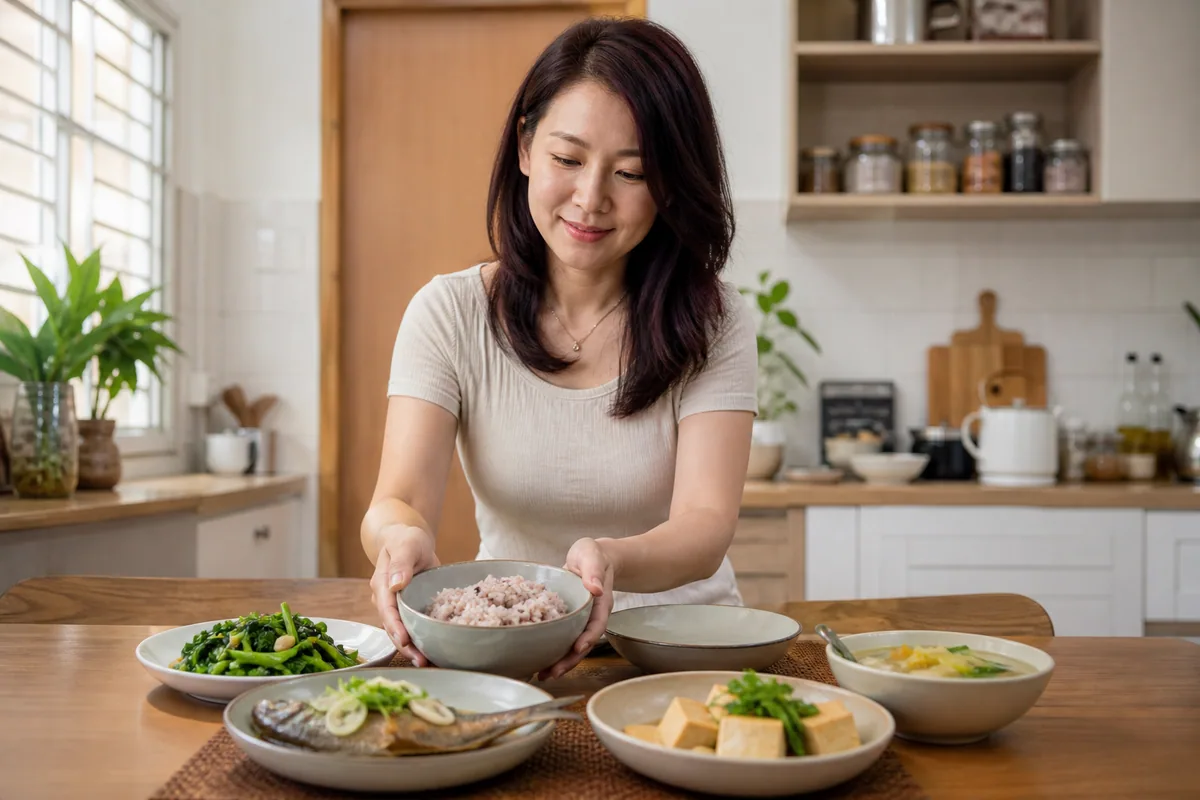
Nutrition is one of the most practical steps you can start on your own when living with PCOS. It is not about strict diets or extreme food bans, but about building a way of eating that helps control blood sugar, lowers inflammation, and can be sustained long term with the local foods already on our tables. This page gathers the nutrition basics for women with PCOS in Malaysia so you can begin with small, sensible steps.
Why nutrition matters for PCOS
Many women with PCOS have a tendency towards insulin resistance, where the body has to make more insulin to control blood sugar. A way of eating that flattens blood-sugar spikes can help ease this burden. Commonly discussed approaches include low glycaemic index (GI) carbohydrates, meals balanced with protein and fibre, and more anti-inflammatory foods. This is not medicine and not a cure; it is part of a lifestyle that supports overall health.
You do not have to cut out rice entirely. What matters more is the type, the amount, and what you eat alongside it. For ideas on how to adjust favourite dishes without feeling deprived, see the nasi lemak modification guide, which shows how to keep the flavour while balancing the plate.
What the guideline says: no single magic diet
The 2023 international PCOS guideline states clearly that no single dietary pattern is proven superior to others for PCOS. There is no need for keto, no need to cut gluten, and no official mandatory “PCOS diet”. Instead, the guideline recommends the same healthy eating advised for the general population, adapted to your taste, budget, and goals. Patterns such as the Mediterranean and DASH diets are recognised because they are rich in vegetables, whole grains, fish, and healthy fats.
Lifestyle change benefits metabolic health and quality of life even when weight does not drop much, so the goal is not just a number on the scale. For women carrying extra weight, a modest loss of around 5 to 10 percent is associated with more regular periods, better ovulation, and improved metabolic markers. The evidence is moderate to strong for metabolic benefits from lifestyle change. This matters in Malaysia because weight and fertility are two of the heaviest local burdens women with PCOS feel.
The PCOS plate basics
Picture your plate divided: half vegetables, a quarter protein (chicken, fish, eggs, tofu, tempeh), and a quarter carbohydrate. Add healthy fats such as olive oil or nuts in moderation. This naturally lowers the blood-sugar load of a meal without counting calories.
Starting the day well also helps. A high-protein breakfast tends to reduce hunger and sweet cravings by midday, and we share local examples in the Malaysian PCOS breakfast ideas. For the anti-inflammatory component, the anti-inflammatory foods page lists easy choices such as oily fish, colourful vegetables, and local spices.
Low-GI carbohydrates: choose the slower-digested ones
The glycaemic index measures how quickly a food raises blood sugar. High-GI foods (70 and above) are digested fast and trigger a large insulin surge, while low-GI foods (55 and below) release glucose more slowly. In women with PCOS, one controlled trial found a low-GI diet improved insulin sensitivity more than a conventional healthy diet, and this effect occurred even without weight loss. In one 12-month study, the low-GI group also reported more regular periods than the conventional-diet group. Overall, the evidence for low-GI diets in PCOS is rated moderate, but the direction of benefit is consistent.
In the local context, this means small, practical choices. Swap half your white rice for slower-digested brown rice or basmati. Choose whole-wheat bread or chapati over white bread. Have vegetable-and-chicken soup bihun instead of sweet fried noodles. A fuller list of local options is in low-GI Malaysian foods. One simple trick that needs no counting: eat the protein and vegetables first, then the carbohydrate. That order alone lowers the post-meal glucose spike.
Common questions: gluten, dairy, coffee
There is no single ban required for all women with PCOS. Some people feel more comfortable reducing certain foods, but the scientific evidence is still limited and the decision varies by individual. If you are wondering, read the balanced views on gluten and PCOS, milk and dairy, and coffee before making big changes. Avoid cutting many food groups at once without advice, as it can upset your nutritional balance.
Be cautious too with extreme diets that go viral on social media. Very low calorie diets, extreme prolonged fasting, or cutting whole food groups without a medical reason can cause nutrient deficiencies, an unhealthy relationship with food, and most are not sustainable. A gentler, consistent approach usually wins over the long term compared with a strict diet that lasts only a few weeks.
Protein, fibre, and healthy fat: the pillar of every meal
Rather than memorising lists of allowed and forbidden foods, it is easier to remember one formula: every meal should have protein, fibre, and healthy fat, and only then carbohydrates. This combination slows glucose absorption and lowers the overall glycaemic load, even with some rice or bread on the plate.
Protein is the part most often overlooked. Controlled trials in women show that a breakfast containing about 30 grams of protein produces lower glucose and insulin excursions plus longer-lasting fullness. Halal protein sources easily found in Malaysia include eggs, chicken breast, fish, tempeh, tofu, and unsweetened Greek yogurt. Fibre comes from vegetables, fruit eaten with the skin, and whole grains such as oats. Healthy fat comes from eggs, nuts, seeds, and olive oil.
Local oily fish such as mackerel (kembung), Spanish mackerel (tenggiri), and sardines give two benefits at once: protein and omega-3. Meta-analyses of controlled trials in women with PCOS link omega-3 intake with reductions in insulin-resistance markers and triglycerides. The dose used in supplement studies is around 2 to 3 grams of EPA and DHA a day, but you do not need to jump to pills; eating grilled mackerel two to three times a week is a delicious, natural route. If you are considering a fish-oil supplement, discuss it with your doctor and check the NPRA registration and halal status, especially if you are pregnant or breastfeeding.
Where supplements like inositol fit
Inositol is the supplement most often asked about for PCOS. It is not a medicine and not a mandatory treatment. Some small studies suggest inositol may improve insulin sensitivity and menstrual regularity, but a Cochrane review found the overall evidence is still limited and inconclusive, especially for fertility outcomes. This means inositol may help some women, but it does not replace the nutrition and lifestyle basics. The dose used in many studies is roughly 4 grams of myo-inositol a day, sometimes combined with d-chiro-inositol at a 40:1 ratio. If you are interested in trying it, discuss it with your doctor or pharmacist first, check the halal status and NPRA registration of the product, and remember that supplements should support real food, not replace it. For a fuller picture of options and evidence, see the supplements guide.
Eating out, Ramadan, and daily reality
Living in Malaysia means we often eat out, and there is the month of Ramadan. You can still eat at a mamak or stall by choosing more vegetables, protein, and plain water over sugary drinks. More insulin-friendly mamak options include chicken or bone soup with vegetables, grilled fish, eggs, and chapati rather than a mound of briyani rice or layered roti canai. Ask for less sugar in your tea or coffee, or choose plain water and unsweetened tea. Gravies and sweet sambal can be requested on the side so you control the amount.
When fasting, focus on a protein- and fibre-rich pre-dawn meal (sahur) so energy stays steady through the day, and avoid overdoing sweets and sugary drinks at iftar. Break the fast with a modest amount of dates, water, and soup, then pause before a balanced main meal. For most women with PCOS, hormones do not change much simply because of Ramadan fasting. However, if you take medication such as metformin, the timing and dose may need adjusting; this should be individualised with your doctor. More specific fasting guidance is in Ramadan fasting and PCOS. The cost of healthy food varies, so choose versions that are affordable and practical for you; lentils, eggs, tempeh, and mackerel are among the cheaper, nutritious protein sources.
Hidden sugar in drinks: easy to miss
In Malaysia, a lot of sugar actually comes from drinks, not food. Teh tarik, kopi tarik, sirap bandung, iced Milo, and packet drinks at stalls often contain sweetened condensed milk and plenty of added sugar. One glass can deliver a large blood-sugar spike without making you feel full at all, so the body stays hungry afterwards. For women with insulin resistance, repeated sweet drinks throughout the day are one of the quietest reasons blood-sugar control becomes harder.
A simple step is to ask for “less sweet” or “kosong” when ordering, switch to unsweetened tea or coffee, and make plain water your main drink. Fruit juice, even though it looks healthy, loses its fibre and raises blood sugar quickly, so eating whole fruit beats drinking juice. If you crave sweetness, reach for fresh fruit or a small piece of dark chocolate instead of a large sugary drink. Changing drinks alone already makes a noticeable difference to your daily sugar load.
A sample PCOS day on a plate
To help you picture it, here is a simple, local example day. This is not a prescription, just an idea you can adapt to your taste and budget. Breakfast: two boiled eggs with one whole-wheat chapati and cucumber, or oat porridge with chia seeds and half a banana plus an egg on the side. Midday: half a plate of mixed vegetables and ulam, a quarter protein such as grilled chicken or mackerel, and a quarter rice (ideally a brown-rice mix), with low-sugar sambal. Afternoon snack if hungry: a handful of nuts, unsweetened Greek yogurt, or fresh fruit. Dinner: chicken soup or grilled fish with plenty of vegetables and a little carbohydrate.
Notice the recurring pattern: protein and vegetables dominate, carbohydrate is controlled in amount and chosen from slower-digested types, and the main drink is plain water. You do not have to be perfect every day. The goal is a consistent overall pattern, not one perfect meal now and then.
Common PCOS diet myths
A few common beliefs are worth correcting so you do not stress without reason. First, “women with PCOS must cut out rice entirely” is not true; what matters is the amount and what you eat with it. Second, “coconut milk makes PCOS worse” is also inaccurate in terms of blood sugar, since fat does not trigger a glucose spike; the real concern with coconut milk is excess saturated fat for long-term heart health. Third, “there is a magic food that makes PCOS go away” is false; no single food or supplement cures the condition.
Fourth, many assume you must lose a lot of weight before there is any benefit, when a modest 5 to 10 percent loss already helps, and some metabolic benefits occur even without weight loss. Fifth, viral extreme diets are not a shortcut; they are usually unsustainable and can harm nutrition and your relationship with food. Understanding these myths helps you focus on what truly makes a difference: a balanced, consistent, sustainable eating pattern.
Why diet matters for long-term health
Many Malaysian women do not realise that PCOS itself raises the long-term risk of type 2 diabetes and heart disease. This is why nutrition is not just about today’s periods or weight, but a health investment for the future. Controlling blood sugar and insulin consistently from early on can delay or reduce these risks. To understand the core metabolic driver linking daily diet with symptoms, see insulin resistance and PCOS, and for the overall basics of the condition, see what is PCOS.
How to track progress and what to ask your doctor
You can keep your own notes of your menstrual cycle, morning weight, energy, and key symptoms such as acne or sweet cravings over time. These brief notes help you and your doctor see patterns more clearly. For most PCOS components, give at least 8 to 12 weeks before judging the effect of a change, because the body needs time.
When you see a doctor, useful questions to ask include: do I show signs of insulin resistance or prediabetes; which blood tests suit my situation and how often should they be repeated; do I need a referral to a dietitian for a more specific eating plan; and if I am planning a pregnancy, what are the next steps. At a KKM Klinik Kesihatan, a visit is usually around RM1 for citizens and follow-up around RM5, while private costs vary. The medical officer can refer you to a hospital O&G or endocrine clinic for further assessment. For nearby clinic options, see the directory by city in Malaysia.
Diet is support, not a replacement for treatment. If your periods are very irregular, you are trying to conceive, or symptoms worsen, get a doctor’s assessment at a government or private clinic, and talk to a dietitian if you need a more specific plan. No single food makes PCOS go away; the goal is to build a consistent, insulin-friendly eating habit you can sustain for the long term.